
Case study · Not documented
The Fabric Co.
A 28,000-product catalog makes “just import the CSV” stop sounding like a serious migration plan.
- Shopify Plus
- Shopify Admin API
- CSV/data processing
- Product/variant mapping
- Discipline
- Large catalog migration · Product data · Shopify Plus
- Year
- Not documented
- Engagement
- Fixed scope
- Status
- Live
01Context
- Import and structure a very large product catalog.
- Normalize supplier data for Shopify.
- Preserve reliable product relationships at scale.
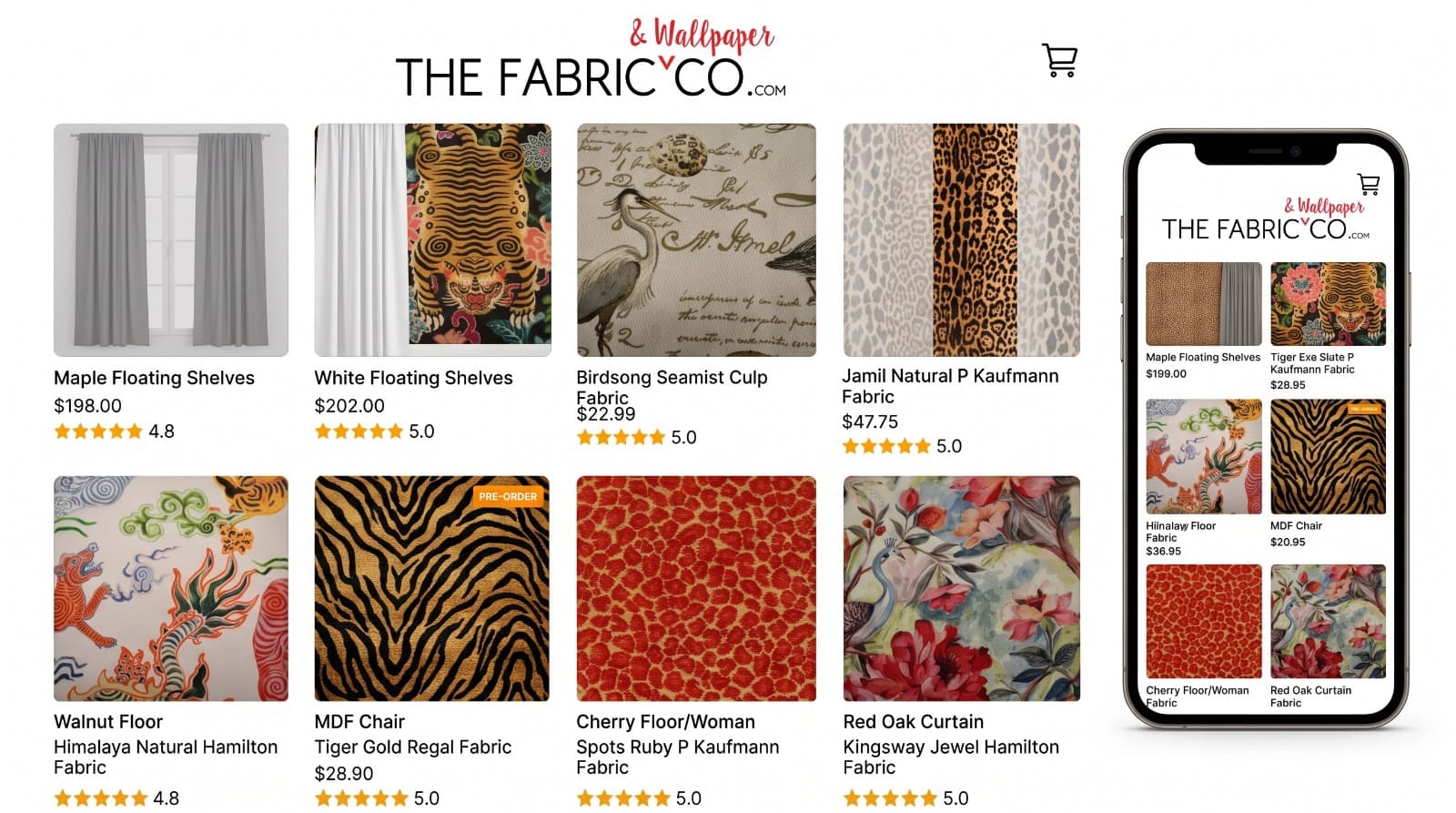
The Fabric Co. operates a large supplier-driven product catalog with tens of thousands of items.
At that size, catalog migration becomes a data-engineering problem involving mapping, consistency, batching, validation, and Shopify limits.
HeapByte worked on moving and structuring the catalog for Shopify while keeping the product dataset manageable at scale.
02What was in the way
- 01
Catalog volume
Tens of thousands of products make manual correction impractical.
- 02
Supplier consistency
Source datasets are rarely normalized exactly the way Shopify expects.
- 03
Import reliability
Large jobs need validation and error handling to prevent silent partial migrations.
03Architecture
What we built, and what we deliberately left alone.
- 01
Structured mapping
Source fields are mapped into Shopify product, variant, and metadata structures.
- 02
Batch processing
Large datasets are processed programmatically rather than as one fragile manual upload.
- 03
Validation
Imported catalog records are checked for structure and consistency.
Delivery
- Source-data review
- Mapping
- Batch migration
- Validation
- Catalog cleanup
04Outcome
- Catalog size
- ~28,000 products
- Processing
- Programmatic
- Catalog structure
- Normalized
Large supplier dataset handled for Shopify
Replaced impractical manual migration
Supplier data adapted to Shopify's model
05Engineering notes
- Batch import
- Records are processed in manageable chunks to improve reliability and observability.
- Product mapping
- Supplier attributes are transformed into Shopify-compatible products, variants, and metadata.
- Error handling
- Failed records can be isolated rather than invalidating an entire migration.
- Scale
- Automation makes repeat runs and incremental corrections feasible across tens of thousands of products.
What we took from it
- 01Large migrations should be treated as data pipelines.
- 02Source validation saves more time than post-import cleanup.
- 03Stable identifiers matter when jobs need to be rerun.
- 04Shopify's catalog model should drive mapping decisions before data transformation starts.
Disciplines applied
Next case study
Tokyo Seta
We developed advanced custom Shopify functionality for Tokyo Seta involving backend APIs, database-backed workflows, and application features beyond theme-level development.
Similar problem?
We will tell you whether this approach fits.
Every store is different. Send us yours and we will say what we would actually do — including when the answer is less work, not more.