
Case study · 2025–2026
Säsongsgruppen Seller QR Platform
One Shopify store needed to know exactly which club, team, and seller deserved credit for every order.
- Shopify
- Remix
- Node.js
- Prisma / PostgreSQL
- Discipline
- Custom Shopify app · QR attribution · Payouts · Fundraising
- Year
- 2025–2026
- Engagement
- Fixed scope
- Status
- Live
01Context
- Track Shopify orders back to individual sellers and teams.
- Give administrators tools to manage clubs, teams, members, and products.
- Build a traceable payout system around seller-generated revenue.
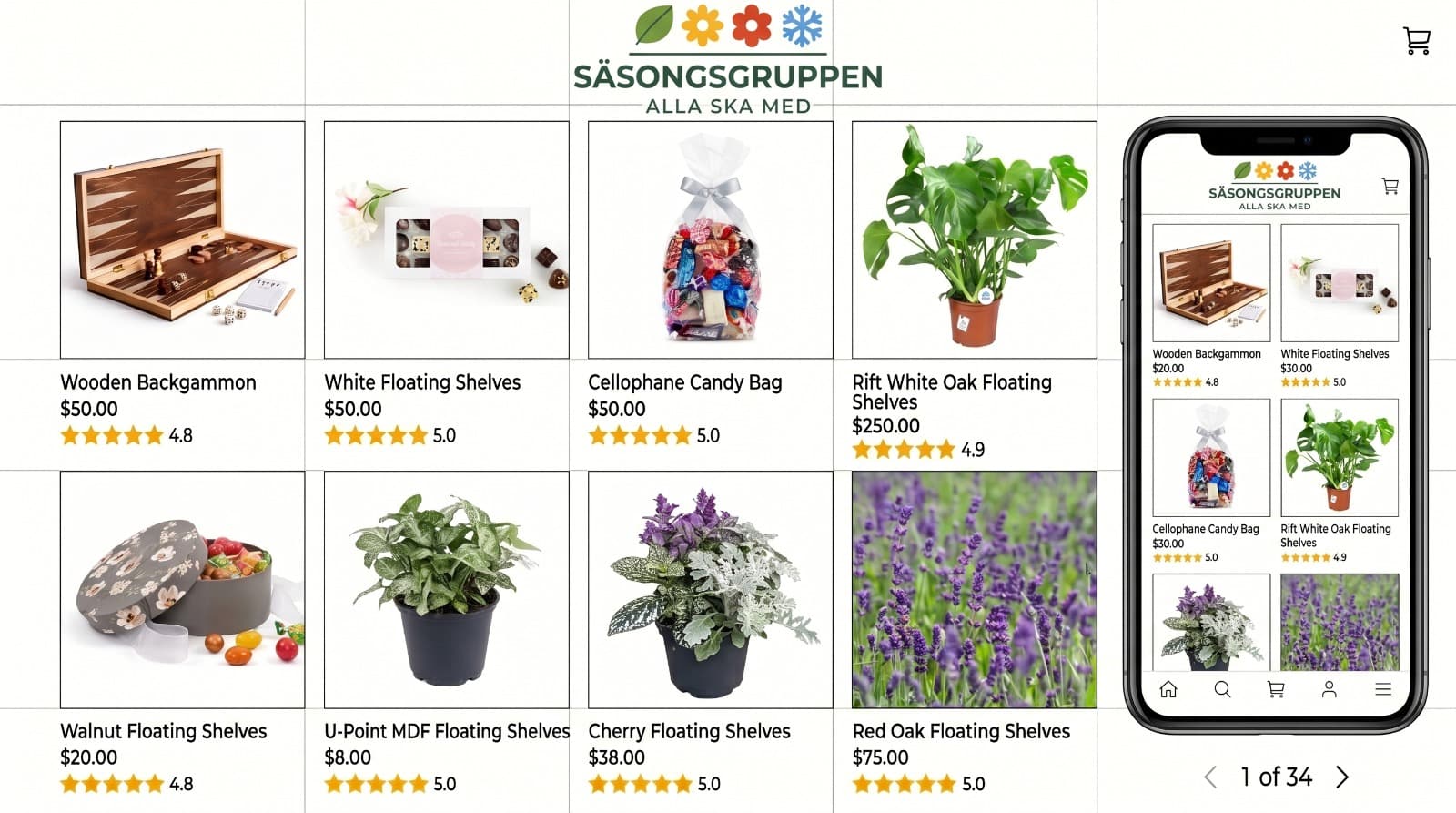
Säsongsgruppen works with sports clubs whose members sell shared Shopify products as part of fundraising campaigns.
The storefront inventory is shared, but every purchase needs attribution back to the correct seller, team, club, or age group without forcing customers through a complex login process.
HeapByte developed a custom Shopify application around seller-linked QR codes and built the operational system behind attribution, administration, reporting, and payouts.
02What was in the way
- 01
Attribution without accounts
The customer journey had to remain simple while seller identity survived from QR entry through checkout.
- 02
Multi-team relationships
Team leaders and members can participate across multiple organizational structures.
- 03
Financial traceability
Payout requests and manual adjustments needed an auditable ledger rather than mutable balances.
03Architecture
What we built, and what we deliberately left alone.
- 01
Seller-link attribution
A seller identifier travels from QR entry through the Shopify purchase flow.
- 02
Club/team hierarchy
The application models clubs, teams, leaders, members, and assigned products separately.
- 03
Append-only payout ledger
Payout activity is recorded as transactions with running balances and references.
Delivery
- Shopify MVP
- Seller & team administration
- QR attribution
- Reporting
- Payout system
04Outcome
- Attribution
- Seller-level
- Payout workflow
- End-to-end
- Languages
- 2
- Infrastructure
- Self-hosted
Shopify orders tied back to seller/team context
Request, approve/reject, paid state, adjustments
English and Swedish
Deployed to client VPS with production tooling
“He is very methodical and follows up throughout the entire process. He listens carefully and has genuinely improved on everything we asked for.”
05Engineering notes
- QR attribution
- Seller identifiers are stored through the customer journey and associated with resulting orders.
- Payout reservation
- Requested payout amounts are reserved so the same available balance cannot fund duplicate requests.
- Ledger design
- Adjustments and payouts create records rather than rewriting historical balances.
- Infrastructure
- The application was deployed using a client-controlled VPS environment with backup and operational services.
What we took from it
- 01Attribution can be implemented without forcing buyers to create accounts.
- 02Financial workflows need immutable transaction history.
- 03Organizational hierarchies should not be encoded into Shopify customer tags alone.
- 04A focused MVP can evolve naturally into operational software.
Disciplines applied
Next case study
Citizen Atelier
We translated Citizen Atelier's Figma designs into Shopify and built dynamic artwork framing previews across sizes, orientations, frame finishes, and print styles.
Similar problem?
We will tell you whether this approach fits.
Every store is different. Send us yours and we will say what we would actually do — including when the answer is less work, not more.